It fails quietly — until it doesn’t
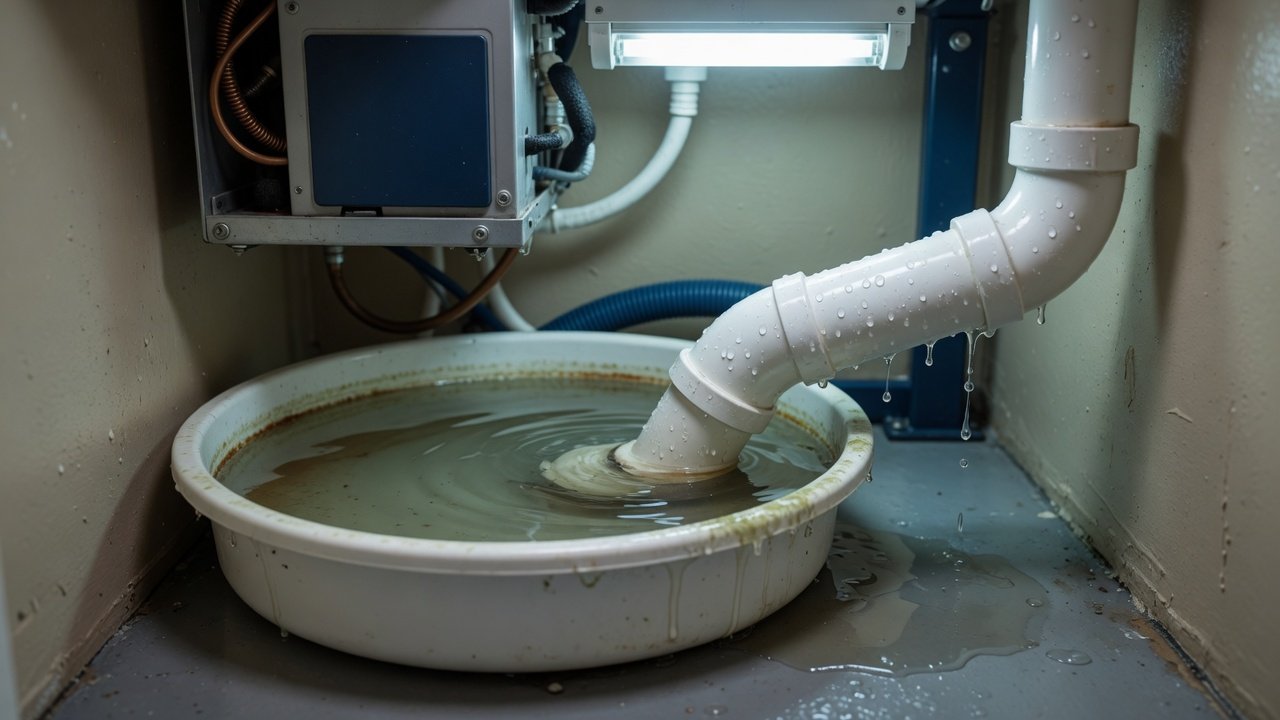
Your air conditioner removes humidity from indoor air. That water has to go somewhere. In most homes it collects in a pan and leaves through a condensate drain line. When algae, slime, and debris restrict that path, water backs up. Safety switches may shut the system off. Or water finds a path onto ceilings, closets, and floors.
- Gurgling near the air handler
- Water in the drain/overflow pan
- Sudden AC shutdown on a hot day
- Musty smell near the handler
The early signs are easy to miss if you do not know what they mean. Learning them is pure homeowner value: you catch problems while they are still small.
Warning sign 1: Gurgling near the air handler
A healthy drain is usually uneventful. Gurgling, bubbling, or sucking sounds near the air handler or drain connection can mean air and water are fighting through a partial restriction. One gurgle on a weird day is not a crisis. Repeated gurgles during cooling cycles deserve attention.
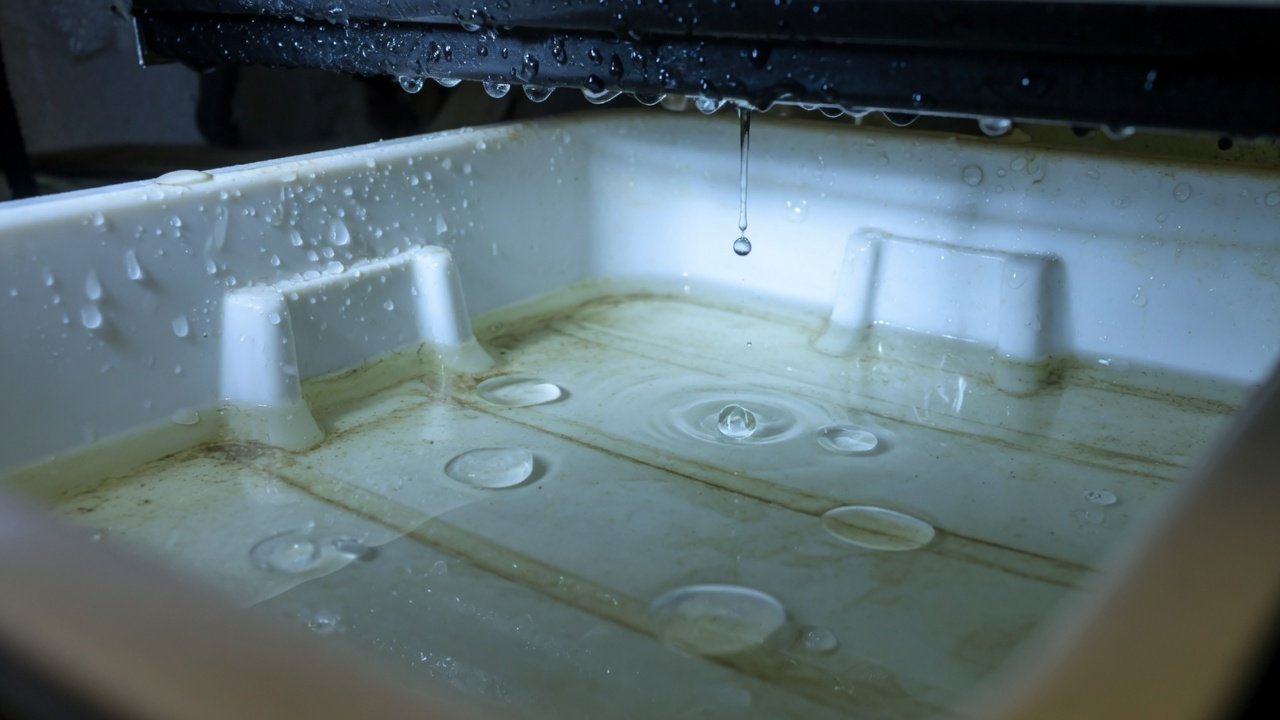
Warning sign 2: Water in the overflow pan
Many systems have a secondary pan or a visible primary pan area. Standing water where you usually see dry metal is a message. It can mean the primary path is slow or blocked and water is taking a backup route — or about to.
If you see water, do not ignore it because it is only a little. Little is how overflow stories start.
Warning sign 3: Sudden shutdown on a hot day
Float switches exist to kill power to the system when water rises too high. From your perspective it can feel like the AC just died. Supplies go warm. The house climbs. Outside, things may look normal enough to confuse you.
If the system stopped and you also see water in a pan, treat that as a drain-related emergency for comfort and property — not as a random electronics mystery.
Warning sign 4: Musty smells around the handler
Stagnant moisture and organic growth can produce musty odors near the air handler closet or vents. Smell alone has several possible causes, but in Florida cooling season it should put drain and pan hygiene on your mental list along with filter condition.
Warning sign 5: Ceiling stains or damp drywall near the air handler
Stains are a late sign. By then water has already left the safe path. Photograph stains, note dates, and avoid the wait and see if it grows approach for active dampness. Wet building materials are a bigger problem than a weekend of inconvenience.
Warning sign 6: Repeated it works after I mess with it cycles
Some homeowners flip breakers, dry a switch area, or clear a small visible clog and get a day or two of cooling again. Intermittent recovery can mean the restriction is partial and reforming. That pattern is useful information: the system is trying to tell you the drain path is not reliable.
Warning sign 7: Higher indoor humidity with longer runtimes
If the house feels clammy even when the temperature is close to setpoint, several issues could be involved. Drain problems that cause short cycling or shutdowns can absolutely play into humidity control. Track symptoms together rather than in isolation.
What to do when you notice a sign
Stay calm and gather facts:
- Check whether air from supplies is warm or cool.
- Look safely at the air handler area for standing water — do not touch electrical components with wet hands.
- Note any recent filter neglect, furniture blocking returns, or construction dust.
- Write down when shutdowns happen. Peak afternoon is a clue the system was running hard.
- Avoid pouring random chemicals down the line unless a qualified person directed you for your specific setup.
The goal of early detection is options. Waiting until stained drywall removes options.
What not to do
- Do not keep resetting a system that is tripping on water without addressing why water is high.
- Do not assume a wet ceiling is just humidity in the air without inspecting sources.
- Do not stick wire hangers wildly into drain lines as a hobby — you can damage pipes or push a clog deeper.
- Do not ignore repeated pan water because a storm weekend distracted you.
How this ties to the other tips
Clean filters and clear airflow reduce unnecessary strain. Sun control and sane thermostat habits reduce extreme recovery runs. Pan tablets can help slow organic growth between deeper cleanings. Quarterly attention is the long-game version of not being surprised.
Warning signs are the bridge between everyday habits and why is my house wet.
A simple awareness routine
Once a month in peak season, when you check the filter:
- Peek at the pan area if accessible and safe
- Listen for new gurgles during a cooling call
- Glance at ceilings and the air-handler closet floor
- Note any unexplained shutdowns in your phone
Two extra minutes. Huge difference in how early you catch trouble.
Quick checklist
- Gurgling during cycles
- Water where the pan should be dry
- Float-switch style sudden stops
- Musty handler smells
- Stains or damp materials
- Intermittent clog behavior
- Humidity and comfort changes alongside the above
The bottom line
Drain line problems rarely send a polite email. They gurgle, drip, trip, and stain. If you learn the early language of the system, you protect comfort and the house itself. Do not wait for ceiling art. When something looks or sounds off around the condensate path, treat it as information worth acting on — early.
Secondary safety devices you might have
Depending on the install, you may have:
- A float switch in the primary pan
- A switch in a secondary pan
- A wet switch on a condensate line
- A condensate pump with its own safety cutout
You do not need to name every part. You need to respect that a shutdown may be intentional protection. Forcing the system to run while water is high can turn a switch trip into a ceiling event.
Documenting for insurance and repairs
If water reaches finished surfaces:
- Photograph pans, stains, and serial/model plates if safely accessible
- Note the date and time cooling failed
- Keep a simple timeline of what you observed
- Avoid destructive DIY that erases evidence of the failure path
Good documentation helps whichever professional or process comes next.
Don’t finish a 2,000-word self-tour. If you’ve got pan water, gurgles, or a float-switch shutdown, book the clean and protect the house. New customers: $97.
Book $97 First CleanOr keep reading — then book when you’re ready.
Pinellas & Hillsborough · New customers
Saw a warning sign? Don’t wait for stains.
Professional AC drain line cleaning for $97 first-time customers. Flat price. Book online. We clear the gunk so Florida humidity doesn’t run your weekend.
Book $97 First CleanReturning customers: book $197 · Questions? booking@wesuckpipes.com