
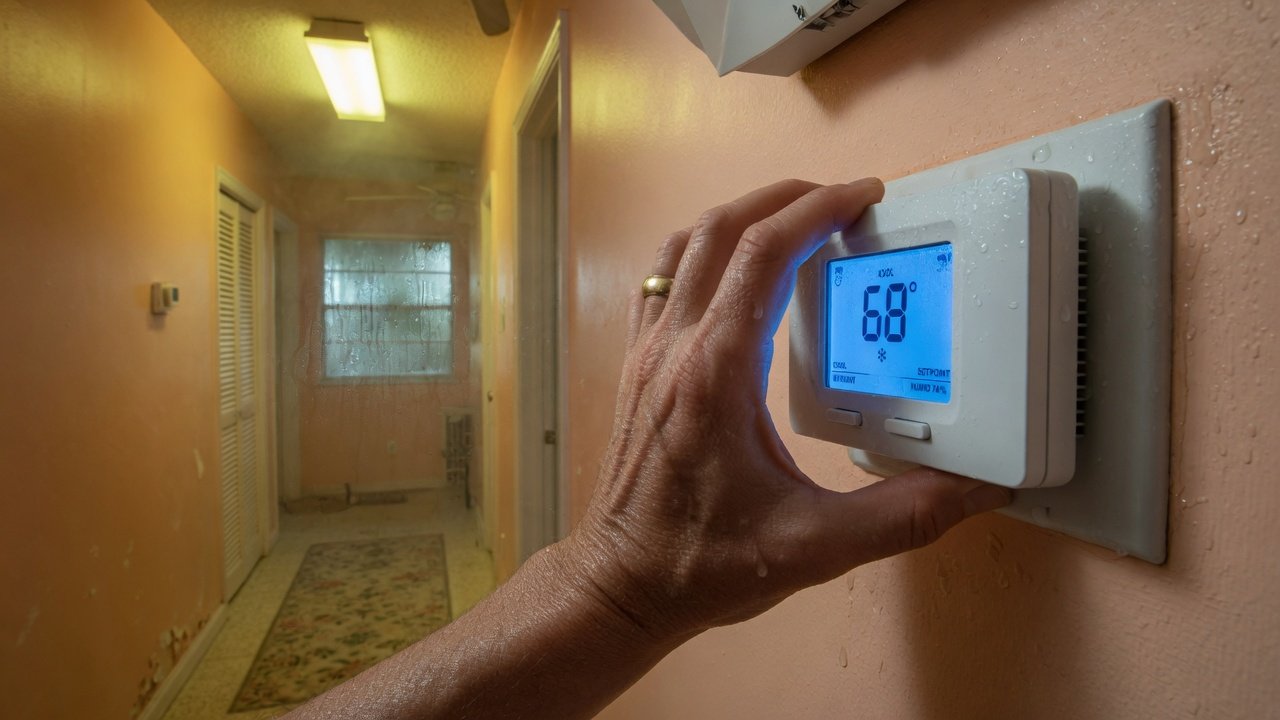
The setback trap nobody warns you about
In dry parts of the country, big thermostat setbacks can save energy with fewer side effects. In Florida, air is heavy with moisture. When you let the house climb while you are gone, then slam the setpoint down when you return, the system has to remove heat and a surge of humidity at the same time.
- You slam the setpoint when you get home
- House feels clammy during recovery
- Thermostat wars every afternoon
That recovery run can feel cold and clammy, take a long time, and train you to think the AC is weak when it is really cleaning up a self-inflicted swing.
What steady means in practice
Steady does not mean you never adjust the thermostat. It means you avoid extremes:
- Leaving for work at 82°F and returning to a demand for 68°F
- Sleeping at 75°F then shocking the system to 70°F at 2 a.m. and back again
- Fighting one hot room by dropping the whole house several degrees
A smaller, calmer band is easier on comfort. Many Florida homeowners do better with modest away settings and gradual recovery than with dramatic energy-saving setbacks that feel miserable for the first hour home.
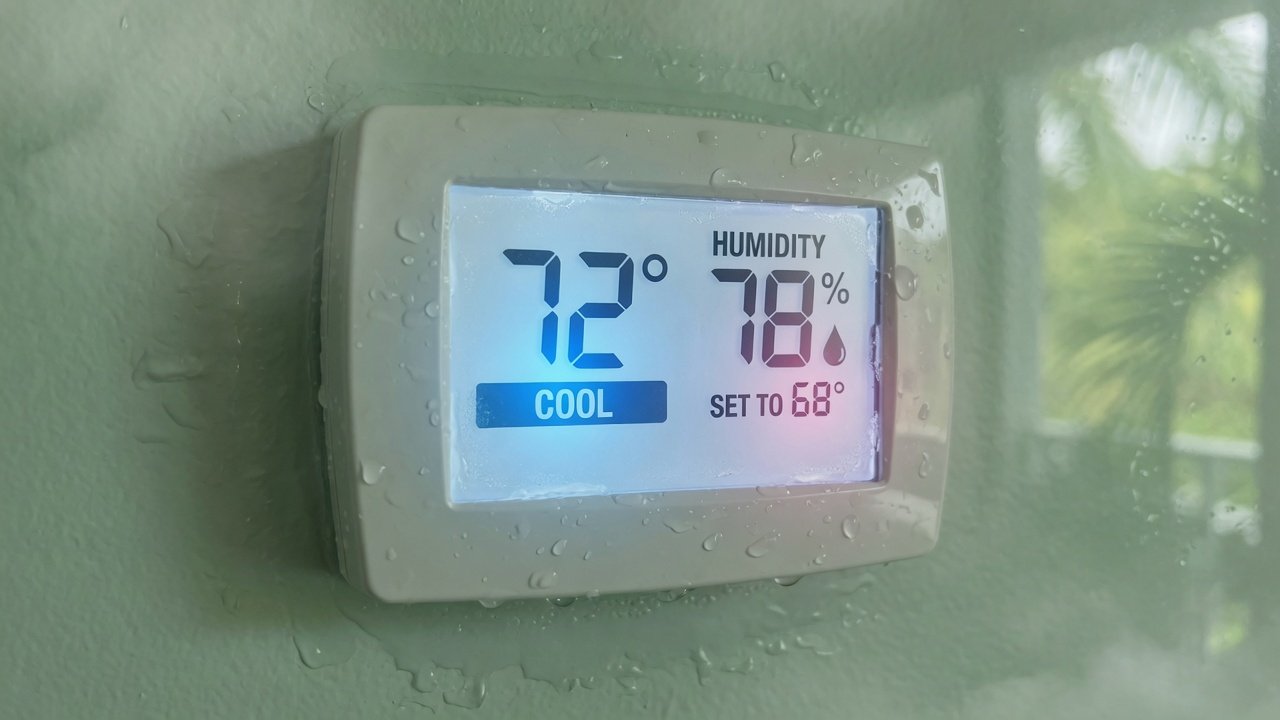
Humidity is the hidden variable
Temperature is what the thermostat displays. Humidity is what your skin notices. When indoor relative humidity climbs, 76°F can feel stickier than 76°F on a dry day. Big setbacks that allow humidity to build can make the recovery period feel ineffective even as the temperature number falls.
If your system has a humidity display or you use a small hygrometer, watch the pattern for a week. You will learn how your house behaves after afternoon storms versus dry breezy days.
Programmable and smart thermostat tips that help
Use schedules that match real life. If nobody is home 9 to 5 on weekdays, a mild away setting can help. Keep the recovery ramp realistic.
Avoid hold confusion. Many comfort fights are just a thermostat stuck on Hold from last weekend.
Do not stack aggressive fan-on habits without knowing your system. Continuous fan can help mix air in some setups and can re-evaporate moisture off the coil in others. If you experiment, change one thing at a time for a few days.
Place matters. A thermostat in direct sun, above a lamp, or in a dead hallway lies to the system. If readings feel wrong, check for local heat sources before assuming the equipment failed.
Coming home hot: a better sequence
Instead of punching 68°F immediately:
- Close blinds on the sun side if they are open.
- Confirm vents are open in the rooms you use.
- Set a reasonable target — often only a few degrees below current temperature.
- Give the system time to pull moisture as well as heat.
- Use fans on people for perceived comfort while the house catches up.
You will usually feel better faster with airflow on your skin plus a sane setpoint than with a desperate low number and stagnant air.
Night settings without the 3 a.m. war
Sleep comfort is personal, but wild overnight swings create noise, cycling, and arguments with whoever is not cold. Try:
- A modest sleep setpoint you can live with for the whole night
- Ceiling fans on low for perceived cooling
- Blackout curtains that also cut morning solar gain
- Keeping bedroom supplies open and unblocked
If one partner wants arctic and the other wants mild, solve with airflow and bedding before turning the whole house into a meat locker that rains on the coil for hours.
Guests, parties, and oven days
Cooking, showers, and crowds add heat and moisture. On those days:
- Run the bath fan during and after showers
- Use range ventilation when cooking
- Expect the AC to run longer after people leave
- Resist the urge to drop the setpoint five degrees to compensate
You did not break the system. You added load. Let it work.
When the thermostat is not the problem
If the setpoint is reasonable and the house still will not cool:
- Check the filter
- Check vents and returns
- Look for drain-line warning signs and unexpected shutdowns
- Note whether outdoor unit is running and whether air from supplies feels cool
Write down times and symptoms. Good notes beat vague it was hot yesterday when you need help later.
Energy anxiety without comfort self-sabotage
It is rational to care about the bill. It is less rational to suffer every afternoon and then blast the system into a long recovery that may not save what you hoped. Florida comfort is a season-long game. Smooth operation often wins over dramatic setbacks.
If you want to experiment with schedules, change one variable for a week and track how the house feels at 5 p.m., not only what the app graphs say.
Quick checklist
- Prefer modest setbacks over deep ones in humid months.
- Cancel accidental Hold modes.
- Keep the thermostat out of sun and heat plumes.
- Recover gradually when you get home.
- Use fans on people during recovery.
- Fix airflow and filters before blaming the thermostat brain.
The bottom line
The thermostat is a steering wheel, not a magic wand. In Florida, calm inputs produce calmer houses. Stop treating every arrival home like an emergency cooldown contest, and you will often get drier air, quieter evenings, and fewer why is it still sticky hours after the number on the wall already moved.
Second homes, snowbirds, and long absences
If the house sits empty for weeks, a moderate away setting often beats baking the interior and then shocking it cold the night before arrival. Extreme heat inside the envelope is hard on more than comfort; moisture and materials notice too.
Before a long trip, set a sane away temperature, confirm the filter is clean, and leave blinds closed on the worst glass. When you return, recover gradually instead of demanding arctic air in twenty minutes.
Talking about setpoints without starting a fight
Household temperature wars are real. A practical truce:
- Agree on a daytime band that is good enough
- Use personal fans and lighter clothing before whole-house drops
- Save deeper cooling for sleep only if both people accept the tradeoffs
- Write the agreed schedule on a note so visitors do not improvise
Comfort is social as well as mechanical. The thermostat is where those two meet.
Steady settings help humidity. They don’t vacuum algae out of a restricted drain. If the system is tripping off or the pan is wet, skip the guessing.
Book $97 First CleanOr keep reading — then book when you’re ready.
Pinellas & Hillsborough · New customers
Habits help. A packed drain still needs clearing.
Professional AC drain line cleaning for $97 first-time customers. Flat price. Book online. We clear the gunk so Florida humidity doesn’t run your weekend.
Book $97 First CleanReturning customers: book $197 · Questions? booking@wesuckpipes.com