
Your AC is an air mover first — not a magician
Your air conditioner is an air mover first. Cold air leaves through supply vents. Warmer household air returns through return grilles so the system can cool and dehumidify it again. Block either side of that loop and comfort gets weird fast: loud vents in one room, dead air in another, longer runtimes, and a thermostat that says one temperature while your body disagrees.
- One room never cools
- Furniture or rugs on vents
- Return grille blocked by storage
In Florida, longer runtimes are not just a power-bill issue. More runtime often means more condensate, more hours under load, and more chances for small restrictions elsewhere in the system to show up as big complaints.
Supply vents: the exits
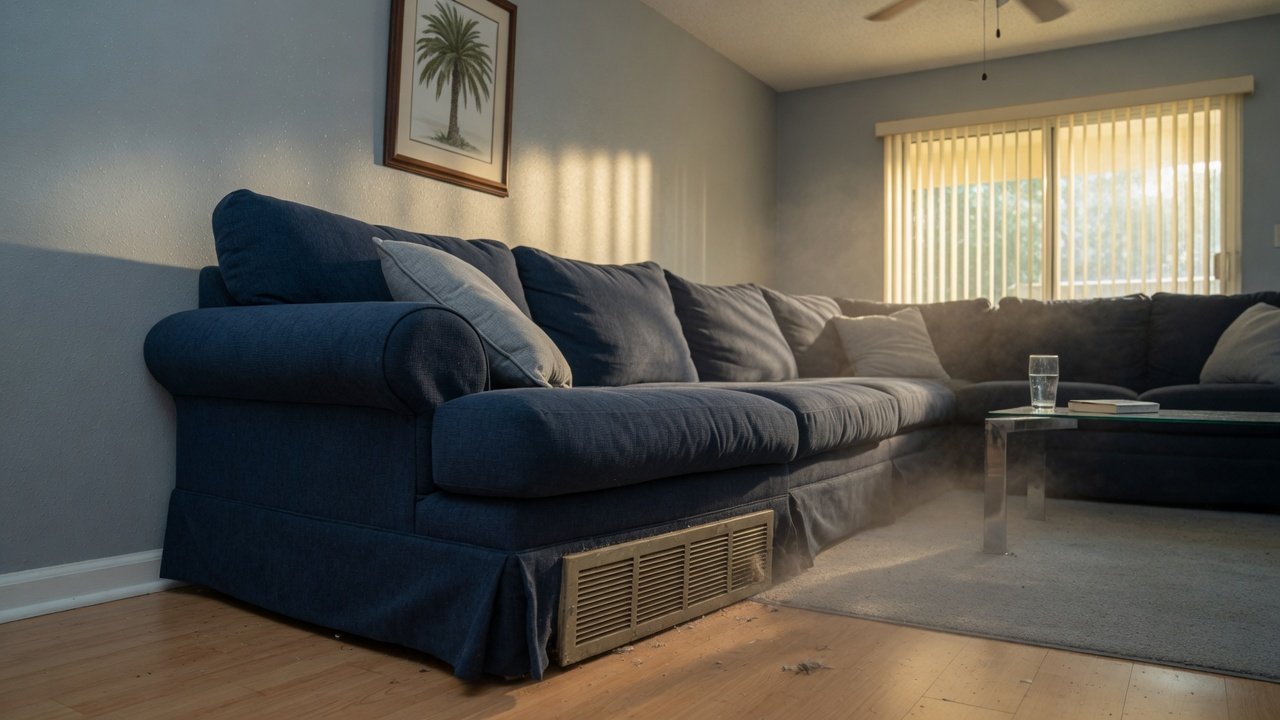
Supply vents are where conditioned air enters the room. Common blockers:
- Sofas pushed tight against wall registers
- Curtains draped over floor vents
- Area rugs covering floor boots
- Storage boxes in spare rooms
- Decorative covers that look nice but choke airflow
If a vent is closed or buried on purpose because that room is fine, remember the system was balanced as a whole. Shutting rooms off aggressively can raise static pressure and make other rooms noisier or less efficient. Light balancing is normal. Turning the house into a maze of closed-off zones is not.
Return grilles: the inhales
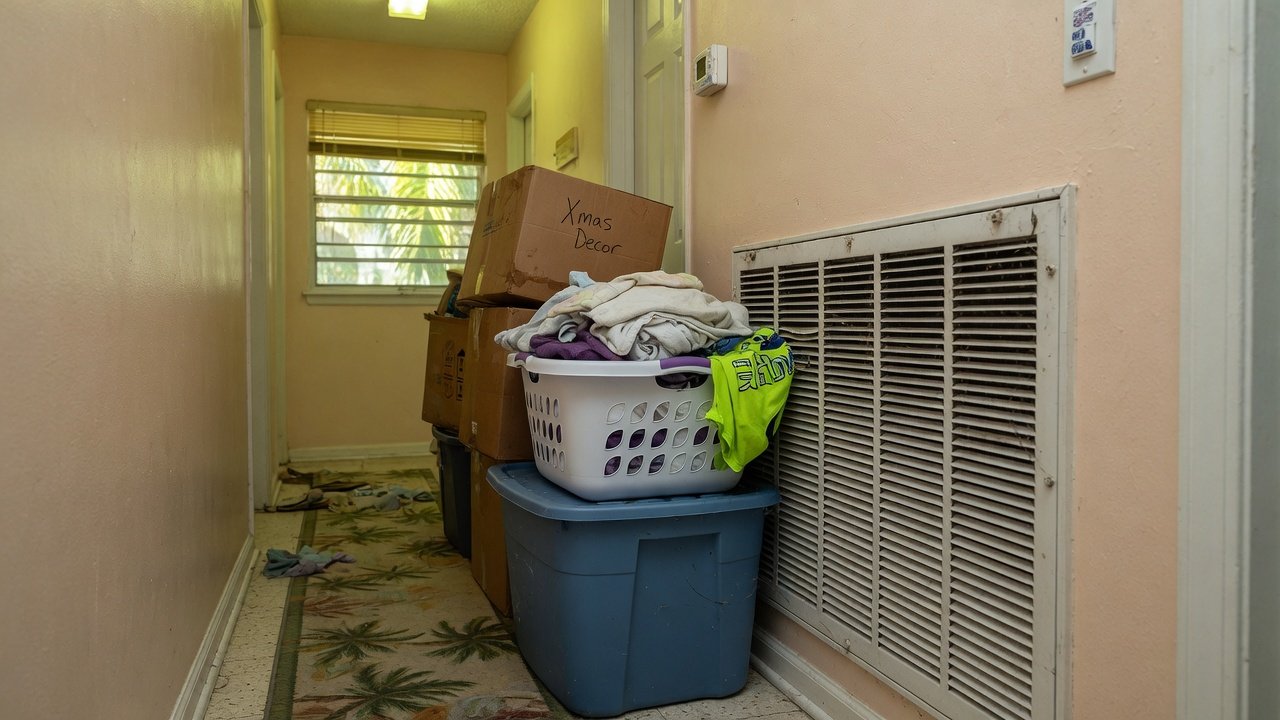
Returns need open space in front of them. A return is not a shelf. When a bookcase, console, or pile of laundry sits tight against a large return, the system starves for air the same way a vacuum does with a hand over the hose.
Signs a return path is struggling:
- Whistling or high-pitched noise at the grille
- Rooms that never catch up on humid afternoons
- Dust patterns streaking oddly around the grille edges
- The air handler sounding strained
Give returns a clear breathing zone. Keep furniture several inches away and avoid parking tall pieces directly in front of large wall returns.
Furniture layout for real Florida living
You do not need a showroom layout. You need airflow that matches how you actually live.
Walk each room once and ask:
- Can I see every supply vent?
- Is anything sitting on a floor vent?
- Is the main return blocked by furniture or storage?
- Did we close vents in unused rooms for months?
Then fix the obvious ones. Slide the couch six inches. Pin the curtain. Move the dog bed off the register. Open the guest-room vent you closed in January and never revisited.
Doors, hallways, and pressure
Homes are systems of paths. Close too many doors with undersized undercuts and some rooms become pressurized while the return path weakens. You may feel this as:
- Doors that gently slam or resist opening when the AC kicks on
- A hallway that feels like a wind tunnel
- Bedrooms that go stale with the door shut
If a bedroom must stay closed for privacy, make sure it still has a supply vent open and a way for air to leave. The point is not to redesign the house tonight. The point is to notice when always-closed rooms are part of a comfort complaint.
Vents, filters, and false diagnoses
People often blame the thermostat or the unit outside when the real issue is distribution. Before you assume a major failure:
- Confirm the filter is clean
- Confirm supplies are open and unblocked
- Confirm returns are clear
- Confirm the thermostat is not fighting a heat load from sun-blasted glass
Many AC is weak afternoons improve after airflow is restored. That does not mean every problem is DIY. It means you should not skip the free checks.
Kids, pets, and the stealth blockers
Real homes accumulate stealth blockers:
- Toy bins parked on floor vents
- Pet gates that redirect traffic and furniture into vent paths
- Seasonal decor stacked in the air-handler closet doorway
- Holiday boxes in the spare room that never left
Do a two-minute vent audit when seasons change and again at the start of peak summer. Put it on the same day as your filter check so it becomes one ritual, not two chores.
Noise as a clue, not a mystery
Louder airflow after you closed three vents is a clue. Hissing at a nearly shut register is a clue. A return that howls after you rolled a bookcase in front of it is a clue. Noise is often the system telling you static pressure went up.
You do not need instruments to respond to obvious noise changes after furniture moves. Undo the last change and see if the sound calms down.
Room-by-room comfort map
If one room is always the problem child:
- Verify its supply vent is fully open and unobstructed.
- Check whether afternoon sun loads that room harder.
- See if a closed door isolates it from the return path.
- Note whether the issue is heat, humidity, or both.
Write it down. Patterns help when you eventually talk to a professional, and they stop you from random thermostat experiments that make humidity worse.
Quick checklist
- Keep supplies visible and open unless you have a deliberate balancing reason.
- Never cover floor vents with rugs or furniture legs.
- Give returns clear space in front.
- Revisit closed vents seasonally.
- Pair a vent walk-through with monthly filter checks in summer.
- Treat new noise after rearranging furniture as feedback.
The bottom line
Clear vents and returns are free performance. No app, no special tool, no waiting for a delivery. In a long Florida cooling season, the houses that feel fine most days are often the ones where air can actually complete its loop. Move the obstacles, and you let the system you already own do the job it was installed to do.
Closets, air handlers, and blocked mechanical rooms
The air-handler closet is part of the airflow story too. If the mechanical room door is blocked by storage, or if return air depends on a louvered door that is covered with coats and bags, the system can starve even when every living-room vent looks perfect.
Keep a clear path to the equipment. Do not treat the handler closet as overflow pantry space. If the door is designed to pass air, do not seal it with plastic totes stacked edge to edge.
After renovations and new furniture
Any time you:
- Get a new sofa
- Install thick rugs
- Finish a bonus room
- Add blackout curtains that puddle over floor vents
…re-run the vent walk. Homes change. Airflow paths that worked last summer can fail after one furniture delivery.
Clear vents help a lot. If you’re still getting pan water, gurgles, or random hot-afternoon shutdowns, that’s usually the drain side — not the sofa.
Book $97 First CleanOr keep reading — then book when you’re ready.
Pinellas & Hillsborough · New customers
Vents clear? Good. Drain still matter.
Professional AC drain line cleaning for $97 first-time customers. Flat price. Book online. We clear the gunk so Florida humidity doesn’t run your weekend.
Book $97 First CleanReturning customers: book $197 · Questions? booking@wesuckpipes.com